
Somewhere in the digital sediment of deleted posts, a sentence still echoes. It was published by Morpho's own account — not a critic, not a competitor — and it said, in the flat cadence of an internal memo, that most curator operations cannot sustain themselves on treasury fees alone. They depend on private distribution agreements. Then the post disappeared. The CEO, Paul Frambot, explained that a third-party AI marketing tool had generated it. Silence followed. But silence, as I have learned across eleven years of reading code and balance sheets, is the loudest warning.
That single deleted paragraph matters more than any audit I have read this cycle, because it was not about a bug. It was about where the money actually comes from.
The bull market is loud right now. Narratives are cheap, TVL is a screenshot, and caution reads as cowardice. Which is precisely why a deleted post deserves more scrutiny than a whitepaper. Let me anchor the details, because the market is already forgetting them.
Morpho is a decentralized lending protocol running on Ethereum and several other networks. Its architectural signature is the isolated lending market: each market is sealed off from the others, so that a failure in one does not bleed into the next. On top of this sits a layer of Vaults, and on top of those sit Curators — third-party institutions that create and manage the treasuries, allocate risk, and take a fee. Think of a Curator as a fund manager for a lending pool. They choose the collateral. They set the parameters. They collect the spread.
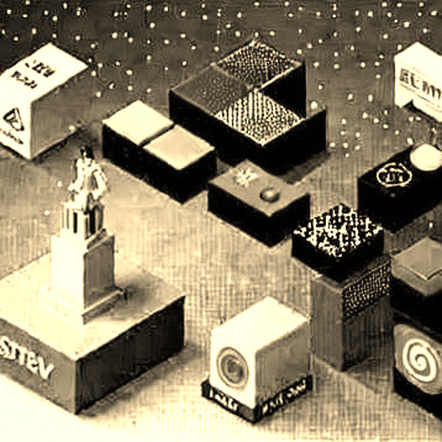
This is a beautiful piece of engineering. When I first traced Morpho's market topology in 2022, I described it in a Zhihu essay as a coral reef — each market a polyp, each polyp sealed in its own calcium shell, the whole structure alive and breathing as one organism. The modularity is real. The composability is real. What the deleted post revealed, however, is that the reef's food supply may not come from the reef itself.
Here is the mechanics of the claim. In Morpho's design, the protocol does not set risk policy at the base layer the way Aave does. It delegates that to the Curator. The Curator earns fees from the Vault. Those fees, in theory, flow from borrowers paying interest — from genuine on-chain economic activity. But the deleted post asserted that this flow is insufficient, that most Curators cannot cover their operating costs from treasury fees, and that they bridge the gap with private distribution agreements.
Private distribution agreements. Read those three words slowly. They describe off-chain arrangements — rebates, incentives, over-the-counter deals — that never appear in a block explorer. They are agreements you cannot verify, cannot compose against, cannot audit. They are the exact opposite of what DeFi claims to be.
This is the part the market is not pricing correctly. When a Curator's revenue depends on private agreements rather than transparent on-chain fees, the protocol's real revenue — the cash verifiable on-chain — is smaller than the headline numbers suggest. And if MORPHO's value capture runs through protocol fees, then the token is discounting a revenue stream that may not fully exist.
Aave's founder, Stani Kulechov, understood this immediately. He called the post "the most bearish take for MORPHO holders." He was right, and not only because he is a competitor. If the fee flow that is supposed to reach the protocol is intercepted by off-chain agreements, then growth in total value locked does not translate into value for the token. TVL becomes a number that breathes on-chain and dies in a spreadsheet.
And here is the second-order wound. The post did not come from a short-seller. It did not come from a rival. It came from Morpho's own mouth, then was retracted, then was blamed on a machine. The sequence — publish, delete, deflect — is what a colleague once called blame attribution as a service. The content is contested; the governance failure is not.
Let me be careful and fair here, because I have spent enough time auditing DAOs to distrust easy conclusions. I wrote a guide in 2022 called "Regenerative Governance" precisely because public shaming solves nothing. So let me weigh the possibilities with an open hand.
The explanation offered is that an AI marketing tool produced the post. Is that plausible? Partly. Modern generative tools do hallucinate. But a generic marketing tool tends to produce optimistic copy — it is trained to sell, not to confess. The deleted text was not promotional. It was precise, negative, and economically literate. It read like a risk assessment. That consistency is what troubles me, and I hold that judgment at moderate confidence, not certainty.
What I can say with higher confidence is this: the content management of Morpho's official account lacks a meaningful review gate. An account that can publish a bearish internal-sounding thesis and then erase it has no disclosure protocol. For a protocol whose central promise is transparency, that is not a small finding. It is the finding.
Account credentials, review workflows, sign-off chains — these are unglamorous things, but they are the immune system of a protocol's public voice. Morpho's immune system failed. The question is whether it failed once, or whether it was never there.
Nor is any of this contained to one protocol. The risk-curation model has become a small industry of its own. Euler, Silo, and a handful of Vault aggregators all borrow the same grammar: isolate the markets, hand the keys to a specialist, and call the resulting fee a market rate. If a sophisticated team like Morpho cannot make the math close on treasury fees alone, the sector's economics deserve a collective re-examination. The deleted post was not a Morpho confession. It was a sectoral symptom that happened to surface in one place.
Here is the audit lens I would apply. Take the Curator's gross fee. Subtract operating cost — risk analysts, monitoring, oracle subscriptions, the quiet labor nobody tweets about. What remains is the margin. If that margin is negative at the on-chain fee rate, then something external must be subsidizing it. That external something is the private agreement. And a subsidy is not a business. A subsidy is a loan from the future, collateralized by the belief of the present. MORPHO holders hold the collateral.
What a credible response looks like is not a tweet. It is a table — Curator by Curator, fee by fee, with the on-chain share clearly separated from the off-chain share. That table would settle the matter in an afternoon. Its absence is itself information.
Now the contrarian turn, because the obvious reading is not the deepest one.
The market is arguing about whether the post was real. That is the wrong question. The real question is why the Curator model — not just Morpho's, but the whole risk-curation sector now sprouting across DeFi — was structured to need private agreements in the first place. And the answer is uncomfortable: the Curator is a fund manager with a fiduciary face and a distributor's incentive. They owe the depositor one thing and the distribution partner another. Those two obligations can diverge. The opacity is not a bug introduced by a careless marketing tool. The opacity is the architecture's native condition. DeFi did not escape the prime broker. It re-clothed him in a modular shell and called the result composability.

Geometry remembers what markets forget. The modular reef is elegant. But elegance does not feed a reef — sunlight does, or in this case, verifiable fee flow. If the flow is off-chain, the reef is living on borrowed plankton. A reef that lives on subsidies is not a reef. It is an aquarium — and someone upstream is paying for the glass.
So where does this leave us, in the middle of a bull market that would rather not hear it?
The structural lesson outlives this single incident. A protocol can decentralize its code and still centralize its economics. It can publish its contracts to a block explorer and still keep its revenue agreements in a drawer. The test of a capital-efficiency narrative is not the TVL chart; it is the fee ledger, and the fee ledger must be on-chain to be trusted.
I am not calling for panic, and I am certainly not issuing a short thesis — I have seen too many markets punish overconfident skeptics. I am calling for a specific, verifiable disclosure: what fraction of Curator revenue derives from on-chain treasury fees, and what fraction derives from private agreements? Until that number is public, every valuation of MORPHO is a valuation of a story.
Prune the dead branches, save the tree. The tree here is the idea that lending can be transparent end to end. The dead branch is any revenue model that cannot be shown in a block explorer. Cut it, and the tree lives. Leave it, and the next deleted post will not need to be deleted — because no one will believe it anyway.
The forward question is simple, and it is not really about Morpho. When the next protocol tells you it has solved capital efficiency, ask it one thing: show me the fees. If it cannot, you already have your answer — and you did not need an AI to write it.